20 Handy Reasons For Deciding On Termite Control Services In Jakarta
Wiki Article
Jakarta's Fight Against Humidity And The Mud Tubes
Jakarta exterminators scrubbing the foundation walls with daily mud tubes and refer to it as termite treatment. It's not. It's housekeeping. The mud-tube is not a threat, but it is evidence. Termites don't construct these earthen pathways because they enjoy the process of construction. They create the paths because their bodies are filled with lots of water encased in thin, cuticle-like skin that will desiccate quickly when humidity is below seventy per cent. Each mud-tube that climbs through a Jakarta structure is an admission. It is the precise point at which moisture escapes from the structure Condensate from air conditioners leaks, capillary rises up in the porous brick. By poisoning the tube while not taking care of the moisture issue Anti-termite service providers are ensuring that the colony will return next door.
1. Mud Tubes Are Hygrometers, Not Highways
Termites deposit soil particles in areas that have the highest transpiration. The tube that is ascending the wall's exterior in the bathroom suggests that vapor has left the mortar joint. A tube that emerges from an edge of a slab indicates that soil is still saturated. The exterminator can become a building performance consultant by analyzing tubes as intrusion routes. This is a much more beneficial job. Charge according to the value of your work.
2. Twelve Percent is Invisibility's Threshold
Below twelve percent moisture content Wood is bio-invisible to termites foraging on it. Above fifteen percent, it emits detectable volatile compounds. Most Jakartan homes have timber that has reached this level many years ago and has not dried. Anti-termite services that do not use pin-type moisture meters, and take measurements of every door window sill, frame, and beam embedded are guessing. Customers will be charged for the certainty.
3. The 300-500mm Moisture Belt
The soil immediately adjacent to wall of foundation is protected from rain by the roof eaves, and remains significantly dry compared to open garden soil. The termite activity of foraging is concentrated in the region 300 to 500 millimeters from the structure, close enough to reach the foundation, but far enough to be able to absorb rain. In the deserts of hydrologic, bait stations are positioned flush against walls. Professional installation involves measuring this gradient to find out where termites actually feed.
4. Potting Mix is a Bait Station Technology
A potting mix with an extremely organic load that is soaked in water and then refilled around the bait station creates an artificial shade of moisture which increases the attraction of the station far beyond its physical site. The urban clay of Jakarta is compacted and does not have the porosity needed by termites and the organic matter they require. Exterminators who insert stations into the soil that is not amended are constructing furniture rather than traps. The hole has to be oversized. The soil has to be brought in. The moisture levels must be artificially enhanced.
5. Above-Ground stations make use of tube behavior
The above-ground stations bind to the active mud tubes and force termites to cross the toxicant-impregnated matrix during their daily trek between nest and feeding site. This isn't baiting, it is toll collection. The tube is intact The termites keep moving and every forager delivers poison back to the colony nucleus. Pesticides who take out tubes prior to placing stations eliminate their own delivery system.
6. Water is attractive and does not Repellent
US patent 6023879, issued in 2000, outlines the process of delivering water to the soil areas surrounding bait stations in order to produce greater moisture content than adjacent areas, thereby actively attracting termites to the toxicant. Twenty-five years on, Jakarta exterminators continue to believe that moisture repels termites. It doesn't. Strategic irrigation is more effective than repellent chemicals. Exterminators don't irrigate bait arrays and are instead waiting for termites to appear.
7. Termite Deserts in Lawn Zones
Turfgrass is fertilized with chemical fertilizers, herbicides, and pesticides that are routinely applied to depress termite foraging activity. In addition, organically rich landscape planting beds sustain continuous termite stress. Anti-termite services that distribute monitoring stations evenly across properties regardless of their ground cover, are ineffective and waste stations on turf that is sterile while under-sampling high-risk beds. Grids for stations must be focused on areas in areas where termites are actually found.
8. Self-Recruiting Increases the Effectiveness
Transferring live termites from a place that's infested into a bait cartridge that is soaked in moisture triggers self-recruitment. The termites that have been brought into the station are able to eat and recruit other nestmates immediately. This is a single step that increases toxicant intake by about 30%. Jakarta exterminators who kill the termites they remove from monitoring stations are not utilizing their effectiveness.
9. Concrete Coring Is Non-Negotiable
Sealed hardscape--driveways, patios, sidewalks--prevents rainfall infiltration and creates artificial dry zones beneath the building perimeter. Professionally developed methods require core drilling in concrete to install bait stations into the soil, then fitting stainless steel caps to flush with the finished grade. The resistance of the homeowner may stop termite control companies from coring the concrete. This means that between 30 and 50% of the building's perimeter remains untreated. Record this restriction. Document this restriction.
10. Scraping tubes is cosmetic Maintenance
Pest control companies sell homeowners the illusion that visible mud tubes are the problem and their removal constitutes treatment. It's not. Scraping tubes without correcting the moisture source that provoked their formation is similar to emptying a mousetrap and not sealing the hole within the baseboard. Homeowners employ exterminators not to clean their walls, but to eliminate colonies. Jakarta anti-termite treatment that distinguishes between colony maintenance and cosmetic destruction will be the dominant choice in this high-end segment.
Conclusion
Jakarta's fight against moisture termites, and mud tubes is not one against termites. It's an uphill battle. Jakarta's drainage problems and construction flaws as well as soil chemical imbalances are manifested through termites. Anti-termite services that position themselves as building performance consultants--arriving with moisture meters, core drills, irrigation tubing, and soil amendments--will win heritage contracts, high-value residential clients, and commercial property portfolios. Services that keep scraping pipes and selling poison like the calendar reads 1995 will compete exclusively with respect to cost. The moisture gradients are measurable. The method of irrigation is 25 years old and patent protected. Jakarta exterminators don't have to choose whether they will use these methods. It's not a question of whether they should implement them first or later than their competitors. Have a look at the top jasa anti rayap for more info including jasa anti rayap jakarta, pest control harga, jasa anti rayap bandung, pembasmi rayap kayu, pengendalian hama, pest control harga, pembasmi rayap, anti rayap, penyebab rayap di lemari, pembasmi rayap kayu and more.
Greater Jakarta Soil Treatment Protocols To Treat Termites
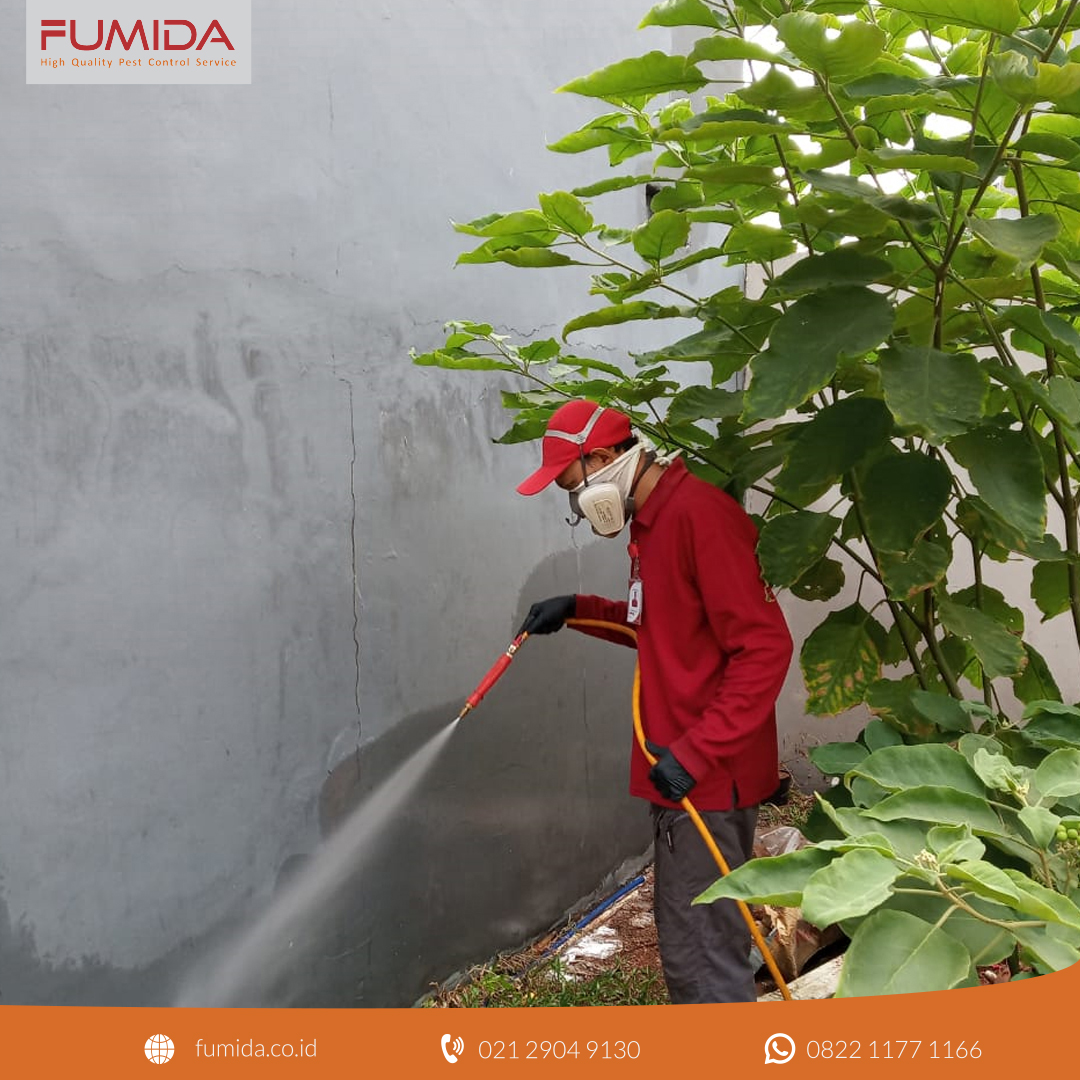
The trench is dug. The rod will be inserted. The chemical is injectable. The technician moves 60 centimeters and repeats the procedure. The process is repeated tens or thousands of time annually in Greater Jakarta. Both homeowners and exterminators consider it a tried-and-tested technology. This isn't. This is a conventional procedure. Subterranean soil treatment for control of pests was developed in temperate zones with soils with diverse textures, moisture regimes, or species. Tranplanted on Jakarta's silty clay, monsoon precipitation and Coptotermes geostroi foraging habits, the traditional "trench-and-drench" results range from temporary suppression to complete ineffectiveness. Greater Jakarta requires soil treatment protocols calibrated for Greater Jakarta's particular conditions. Ten crucial points distinguish chemical treatments that produce invoice lines and treatments that do not exclude termites.
1. Soil Texture Describes Chemical Mobility
Jakarta's urban land is predominantly made up of silty clay. The size of the particles is very smaller. Organic content is low. The porosity is low. On this surface, liquid termiticides don't disperse in a radial fashion like they do in sandy or loamy sands. Instead they pool and migrate down preferred pathways such as cracks, utility ditches and root channels. Exterminators that assume uniform distribution are deluded. After-application verification isn't a matter of faith, but requires soil sampling.
2. The 300 to 500mm Moisture Belt Determines Placement
Roof eaves protect the soil adjacent to the wall of foundation. It receives minimal rainfall. It is drier than open dirt in the garden. The termite activity of foraging is concentrated in the belt about 300-500 millimeters away from the structure--close enough to the foundation, yet sufficient to allow water. Treatments for soil which are applied flush to the wall will miss this belt. The drip line is the line that the trench must be put in.
3. The half-life of hydrolysis is measured in weeks not in months.
Fipronil, imidacloprid, and Bifenthrin are degraded through hydrolysis. Temperature and moisture affect the speed of hydrolysis. Jakarta's shallow depth soil temperatures range between 28 and 32degC. In the majority of cases the soil's moisture levels exceed 20 percent in wet season. Chemical half-life reduces in relation to. Bekasi is about four months away from Ohio in which products with a 12-month labeled efficacy retains its field effectiveness. This must be reflected in the warranty. Most do not.
4. Vertical Barriers require Horizontal Disruption
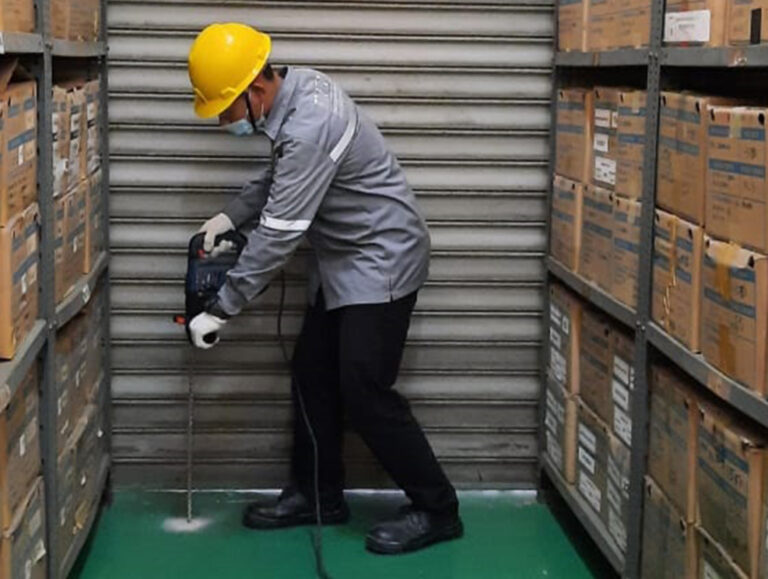
Termites can enter the soil through the interface between the foundation. Only if the chemical agent is at the interface can soil treatment create a vertical barrier. When injecting rods from the surface, it creates chemical barriers at depth however, the top 5 to 10 centimeters untreated unless the rods are withdrawn in a slow manner when injecting. The topsoil is not protected by pest control companies that use rods which are pushed to the depths required and then pulled away.
5. C-Organic content binds to and activates
Organic matter in soil is able to absorb termiticides that are not repellent, thereby reducing the quantity of termiticides that are that are available to termites. Jakarta's urban soils are generally lacking in organic carbon, but the landscape planting beds next to foundations are usually modified with compost and potting mix. To avoid organic binding greater rates of application are needed to treat soils in these zones. Standard rates for labeling are based on mineral soils that aren't altered.
6. Pre-treatment Moisture Audits Are Non-Negotiable
If the amount of water in soil exceeds 22%, it can create the ideal environment. The soil's water content of less than 10% inhibits foraging and lowers chemical pickup. Terminicide-injected exterminators prior to checking soil moisture apply chemical reactions to conditions that are not known. The price of the moisture meter is around two hundred thousand rupiah. The initial cost of retreatment is ten times more due to incorrect application conditions.
7. The volume of the trench must be equal to label rate and not linear meter
Indonesian soil treatment is typically priced by the linear meters. The label instructions specify concentration and volume in units, or per linear foot with specific dimensions of the trench. The quotes that are provided per meter and do not verify the width or depth of the trench not compliance documents, they are treatments. The amount of chemical needed to treat a 15cm by 15cm trench is less than half the amount needed for trenches 30cmx30cm. The price differential is rarely reflective of that.
8. Rodding Versus Trenching: Specific Choices Particular choice
Coptotermes gestroi is found in the top 15-20cm soil. Microtermes reaches moisture during dry periods by using vertical shafts that forage further. Rod injection deposits chemical at depth, intercepting Microtermes. Trenching & mixing chemical deposits across the upper profiles and stopping Coptotermes. Species identification must precede protocol selection. Exterminators that use the same soil treatment for each case are half the time mismatched to Jakarta's species range.
9. Re-treatment Intervals Are Shorter Than Marketing Claims
Indonesian pesticides are extremely competitive. To increase sales, the warranty duration is now extended. The treatment of soil is typically protected by three-year warranties. Under Jakarta conditions the reality on the ground is that it takes 12 to 18 months for a chemical exclusion to be effective, followed by edge penetration and gradual chemical depletion. Homeowners who have experienced termite breakthrough in the month of twenty-two aren't outliers; they are operating on schedule. Exterminators who honor warranty claims at month twenty-two, without arguing about the validity of their coverage will keep clients. Pest control companies who dispute coverage lose clients.
10. Post-treatment soil samples are the only verifiable quality control
The exterminator states that the chemical mixture was correct The injection pressure was correct, and the distribution uniform. The homeowner is unable to confirm this. Soil cores analyzed for concentration of active ingredients provide verification. This service is available. It is affordable. Jakarta antitermite firms that contract third-party soil sampling, and then share the results back with their customers, are differing based on evidence. Services that do not accept samples can be distinguished based on the basis of faith. The market is now more interested in evidence.
Conclusion
Soil treatment procedures that are used in Greater Jakarta persist not because they are optimized to Greater Jakarta conditions but because they are familiar. The mere fact that they are familiar does not assure the effectiveness of a treatment. The city's compacted silty clay requires larger trenches than loamy soils in order to attain similar chemical distribution. The monsoon-influenced climate of the city stretches hydrolysis times, which requires shorter warranty periods and frequent retreatment cycles. The species assemblage requires protocol differentiation based on pretreatment identification. The beds in its landscape require organic-carbon adjustment as well as a higher rate of application. The geometries for its foundations require trenches to be built at the dripline and not the wall line. Jakarta antitermite companies that continue to apply soil treatments that are based on manufacturer labels written for Ohio or Texas or Osaka and Osaka, are assured of poor results. The manufacturers are not liable for these outcomes; the exterminator who did not modify the procedure to local conditions is liable. The process of adaptation involves investing in soil moisture meters sensors for core sampling, lab relationships as well as technician training in species recognition. In a well-established market the investment is not an option. It is the entry fee required to be taken seriously. Homeowners living in Greater Jakarta know the difference between exterminators that have this entry fee and exterminators without. They demonstrate this distinction by allowing higher-priced propositions from the former, and refusing lower ones from the latter. Check out the most popular anti rayap jakarta for site tips including kayu yg tidak dimakan rayap, perusahaan pest control, lemari anti rayap, basmi rayap, anti rayap kayu, anti rayap kayu, jasa anti rayap jakarta, rumah rayap, jasa anti rayap tangerang, anti rayap untuk kayu and more.